Mayan New Year: The Ancient Celebration That Still Shapes Life Around Lake Atitlán
Have you ever wondered what it feels like when an entire calendar “breathes out” and begins again?
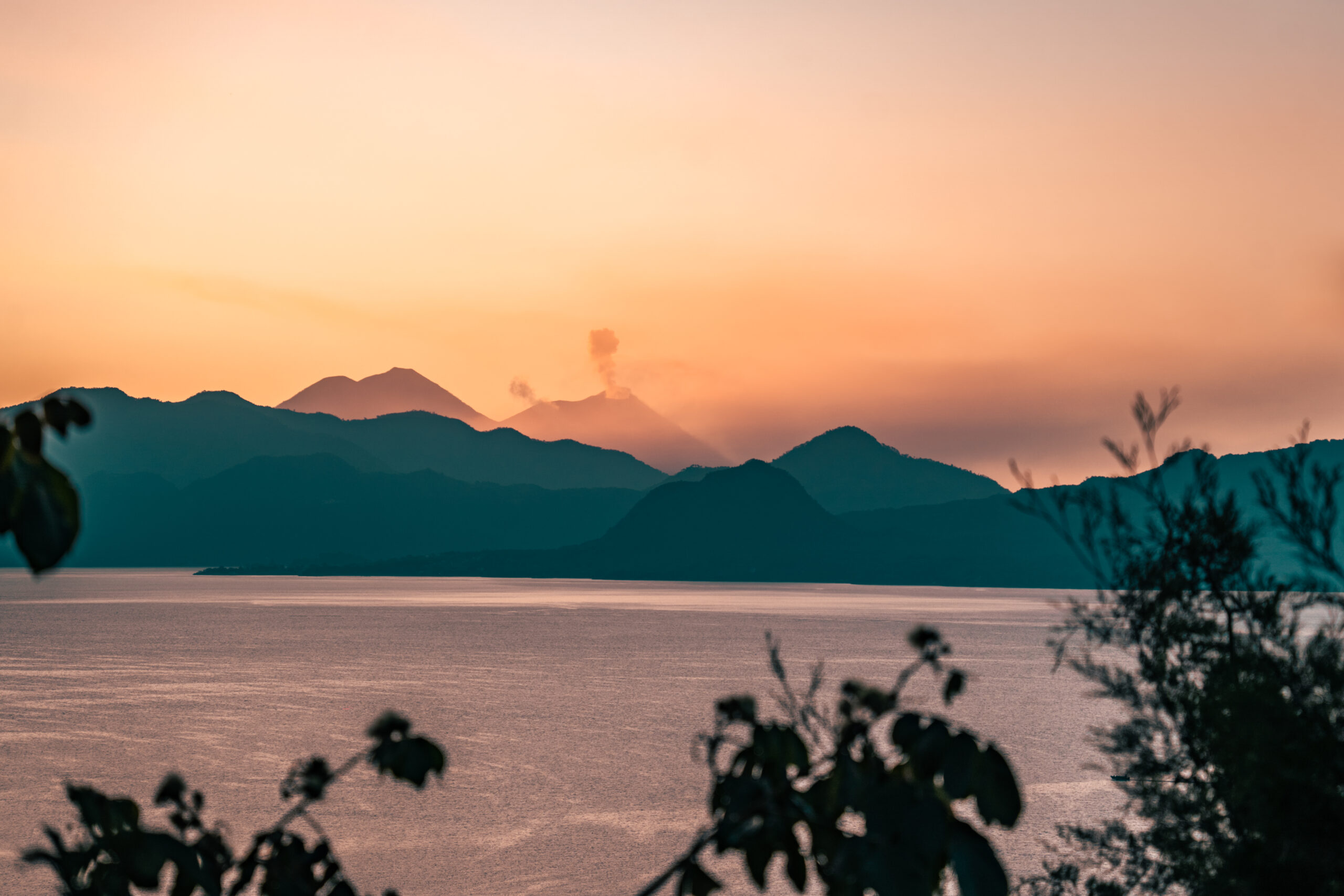
Here at Lake Atitlán, the turning of the Mayan New Year is one of those moments when time feels different — softer, sacred, almost alive. You can sense it in the smoke of copal drifting over the water, in the early-morning drumming echoing across the volcanoes, and in the way people greet the sunrise with gratitude rather than resolutions.
It’s not like the fireworks-and-champagne New Year many of us grew up with. The Mayan New Year is something older… something the earth itself seems to understand.
And if you spend enough time in the Mayan highlands, you’ll feel it too.
Let’s dive into what this ancient celebration really means — and why travelers, healers, and curious souls from all over the world come to places like Eagle’s Nest Atitlán to experience it.
What Is the Mayan New Year? (And Why It’s Not on January 1st)
The Mayan New Year marks the transition into a new cycle of the Haab’, the 365-day solar calendar used by the Maya for agriculture, seasonal rhythms, and community life.
While the exact date varies slightly among regions and ethnic groups, many highland Maya — including communities around Lake Atitlán — celebrate the New Year around February 21, when the Haab’ resets.
Each new year begins with the first month of the Haab’:
Pop — The Month of the Mat
The mat symbolized community, council, decisions, and unity. Starting the year in Pop means beginning with clarity, harmony, and alignment.
It’s basically the ancient version of “starting on the right foot,” but with much deeper spiritual significance.
Why the Mayan New Year Matters — Beyond Just a Date Change
For the Maya, time isn’t linear. It’s cyclical, energetic, and interconnected.
The New Year isn’t about breaking old habits — it’s about stepping into the energy of the new cycle with respect.
Travelers who witness the celebrations often describe them as:
-
grounding
-
emotional
-
strangely familiar, like remembering something you didn’t know you forgot
-
deeply connected to nature
Unlike the Gregorian New Year, which lasts one night, the Mayan New Year is a process — a spiritual cleansing of the old cycle, followed by a renewal of commitments, community, and purpose.
How the Mayan New Year Is Celebrated in the Highlands
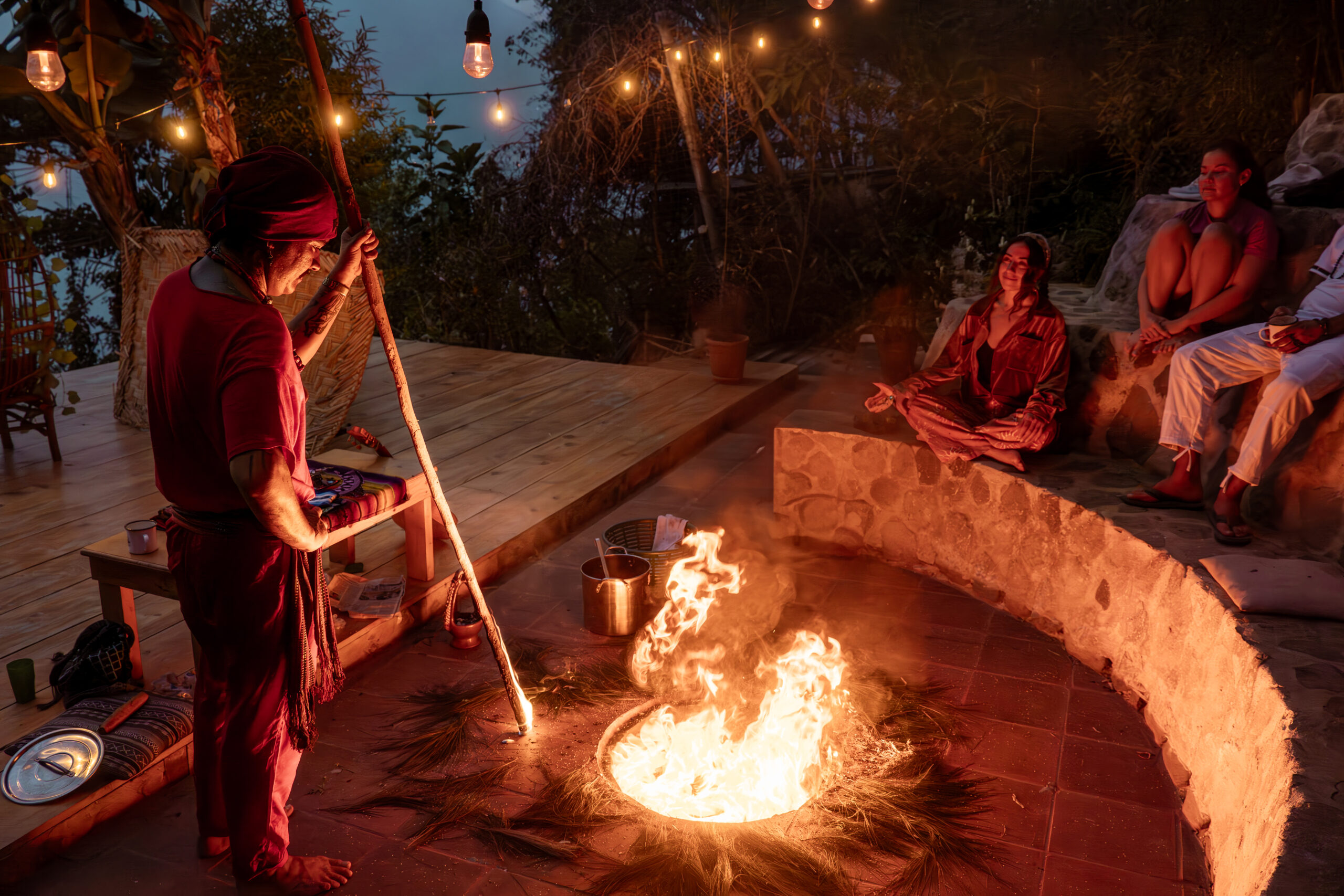
1. Sacred Fire Ceremonies at Sunrise
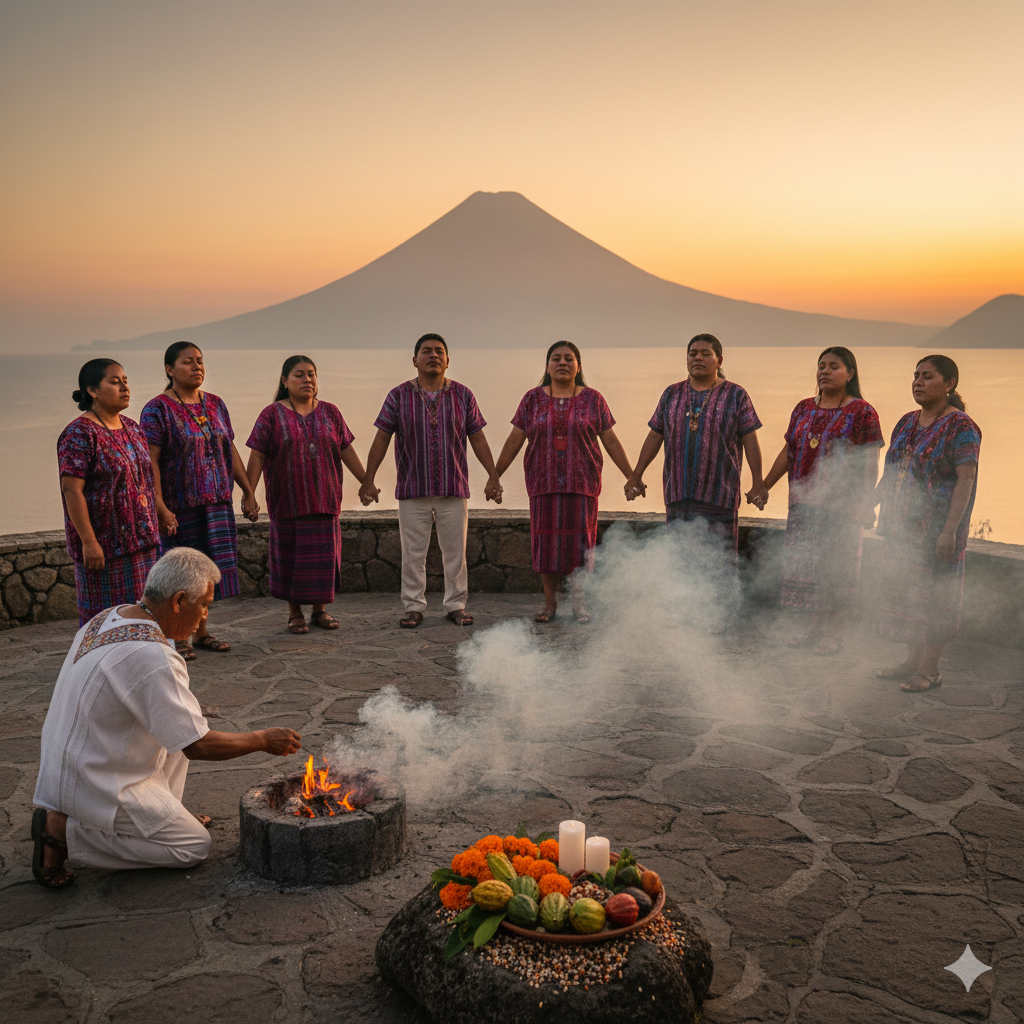
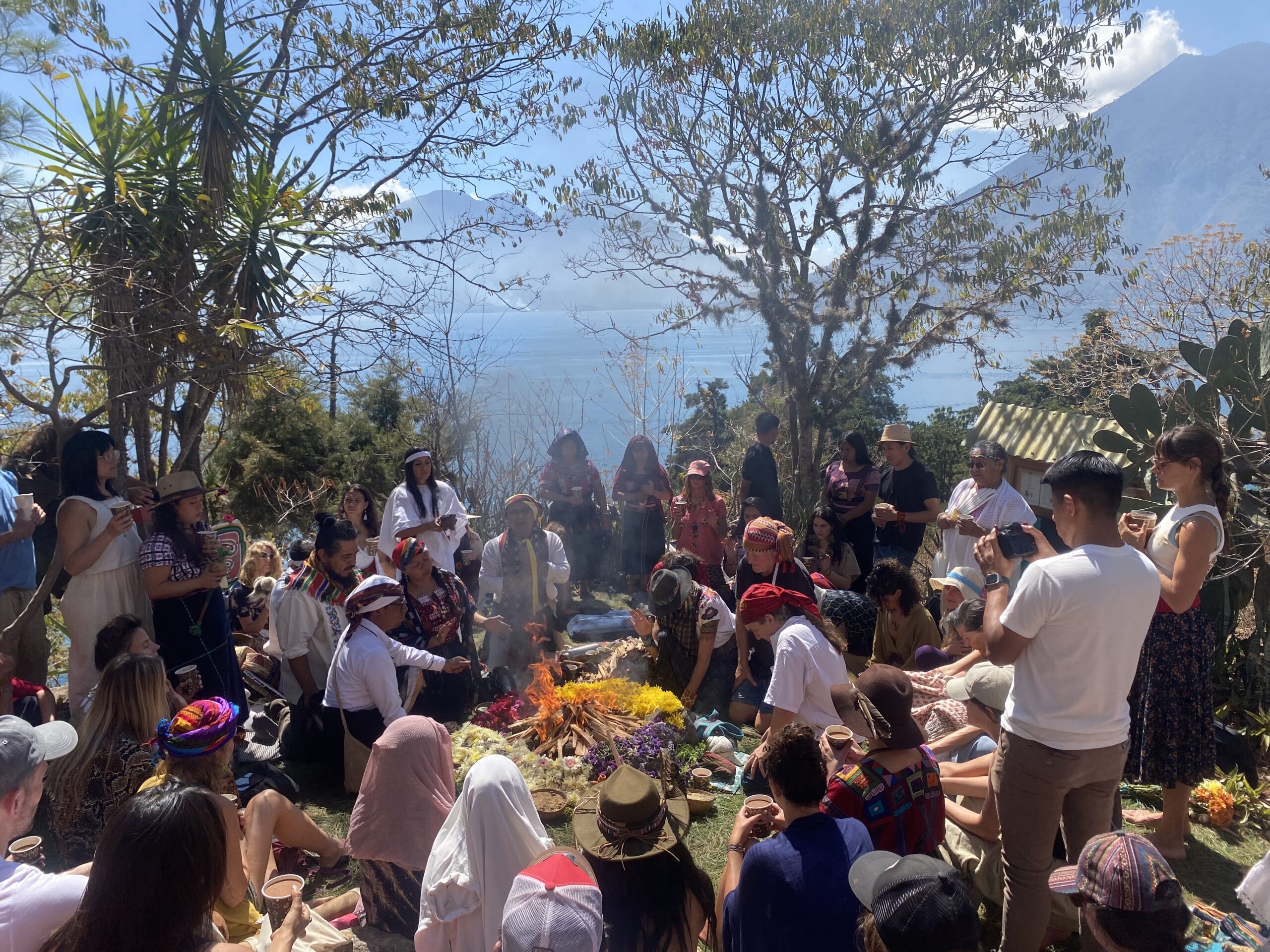
At dawn, daykeepers (Ajq’ijab’) gather around sacred fires filled with:
-
copal
-
candles
-
sugar
-
cacao beans
-
flowers
-
colored corn
-
pine needles
Each color represents an energy, a direction, and a prayer.
If you ever witness this on the shores of Lake Atitlán, it’s almost impossible not to feel something shift inside you — something quiet and ancient.
2. Honoring the New Year Bearer (Cholq’ij Day Sign)
Every Mayan New Year carries the energy of a specific Year Bearer, a day sign from the Tzolk’in calendar that influences the entire cycle.
People ask questions like:
-
What will this year bring?
-
What energy is rising?
-
What does the Year Bearer mean for my family?
-
How should I prepare internally?
It’s spiritual guidance meets cosmic weather report.
3. Community Cleansings (Energetic & Literal)
People clean their:
-
houses
-
altars
-
gardens
-
energy fields
-
relationships
Old fires are put out. New ones are lit.
It’s a full reset — body, mind, and spirit.
4. Offerings to the Earth
In traditional villages, families make offerings of:
-
flowers
-
cacao
-
corn
-
candles
-
incense
These offerings are made to thank the earth and invite blessings for the new agricultural cycle.
5. Music, Dance, and Celebration
Yes — there is joy.
There is laughter.
There is dancing in colorful traje and children running through the streets with incense smoke trailing behind them.
Because for the Maya, celebration is ceremony.
Why the Mayan New Year Feels So Different
The energy of the Mayan New Year isn’t forced. It’s not loud or glittery.
It’s intentional.
The Maya treat time like a living teacher rather than a deadline.
And that’s something travelers feel immediately.
Many people who visit Eagle’s Nest around this time say:
-
“I finally understand what a new beginning really is.”
-
“This isn’t a date on the calendar, it’s like a reset in my soul.”
-
“I feel more connected to the world than I ever have.”
There’s something about the combination of ceremony + nature + community that makes the transition into a new year feel deeply personal.
The Mayan Year Bearers — The Energies That Shape Each Year
Different places use slightly different systems, but in many K’iche’ and Tz’utujil communities around Lake Atitlán, the Year Bearers are:
-
Keij (Kej) — the Deer: strength, nature, grounding
-
E’ — the Road: movement, travel, destiny
-
Iq’ — the Wind: spiritual messages, inspiration
-
No’j — the Wisdom: knowledge, insight, transformation
Each one paints the energetic “tone” of the upcoming year.
For example:
A Year of Kej (Deer)
Strong. Earthy. A year to plant roots, build, and reconnect with nature.
A Year of Iq’ (Wind)
Creative and a little wild. A year of change, ideas, communication, unpredictability.
Understanding the Year Bearer is like having a compass for the year ahead.
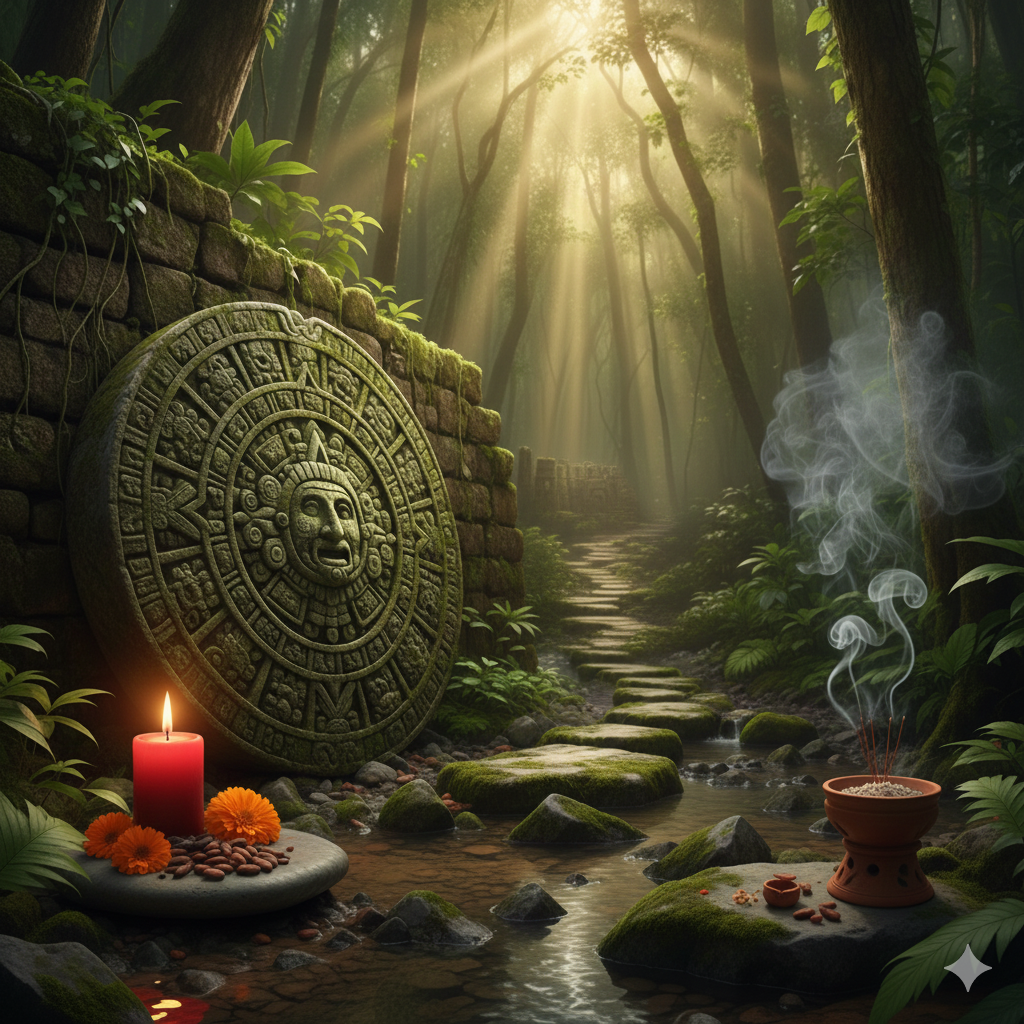
The Mayan Calendar Year 2025: Iq’ — The Wind, The Breath, The Messenger
The year 2025 opens under the energy of Iq’, the spirit of the wind and the breath of life.
Iq’ is movement. Inspiration. Communication. It’s the invisible force that clears what’s stagnant and calls in what’s new.
How to honor & connect with Iq’:
-
Wake up with the sunrise and breathe intentionally — let the wind guide your intentions.
-
Spend time near the lake or on a viewpoint where you can literally feel the air shift around you.
-
Journal more. Speak honestly. Create. Iq’ supports expression in all its forms.
-
Burn copal or incense to call in clarity and cleanse old energies.
It’s a year to move, to shift, to unblock, and to let your spirit widen.
Mayan New Year 2026: Kej — The Deer, The Guardian of Nature
After a year of movement and breath, 2026 arrives with Kej, one of the most beloved energies at Lake Atitlán.
Kej is the deer, the mountain, the forest, the four sacred corners of the Earth.
It is steady, grounded, protective — a year of reconnecting with nature and returning to your center.
How to honor & connect with Kej:
-
Walk barefoot on earth, especially in the forests around the lake or on the volcanic slopes.
-
Plant something. A tree, a flower, a medicinal herb — Kej blesses anything rooted.
-
Practice grounding: meditation under a tree, quiet mornings outdoors, or simply resting your back against a stone.
-
Offer gratitude to the Earth with simple offerings: flowers, candles, cacao, or clean water returned to the land.
Kej years are deeply healing. They bring us home to ourselves.
Iq’ → Kej: A Beautiful Two-Year Transition
This transition — from the airy clarity of Iq’ to the grounded wisdom of Kej — is powerful.
It’s like the breath (Iq’) guiding you back into your body and into the land (Kej).
A clearing followed by a rooting.
Here at the lake, many people feel this shift strongly.
It’s a reminder that cycles aren’t random — they’re invitations.
Travel Tips: How to Experience the Mayan New Year at Lake Atitlán
If you’re visiting Guatemala around this time, here’s how to experience the celebration respectfully and meaningfully:
1. Join a Fire Ceremony With a Local Daykeeper
Many communities around the lake welcome guests — if you come with respect.
You can find ceremonies in:
-
San Marcos La Laguna
-
Santiago Atitlán
-
San Juan
-
Santa Catarina
-
San Pablo
Eagle’s Nest often collaborates with local guides and elders too.
2. Wake Up for the Sunrise
The New Year begins with the first light.
There is nothing like watching the sun rise over the volcanoes on this day.
3. Make a Simple Offering
Flowers, cacao beans, incense, corn — small offerings are appreciated.
4. Learn Your Day Sign
It’s like discovering your energetic blueprint in the Mayan system.
5. Be present. Be humble. Be curious.
This day is sacred to many.
Arrive with an open heart and leave transformed.
🌞 Celebrate the Mayan New Year With Us at Lake Atitlán
If the energies of Iq’ and Kej are speaking to you… come feel them here, where the mountains breathe and the lake reflects the sky like nowhere else on Earth.
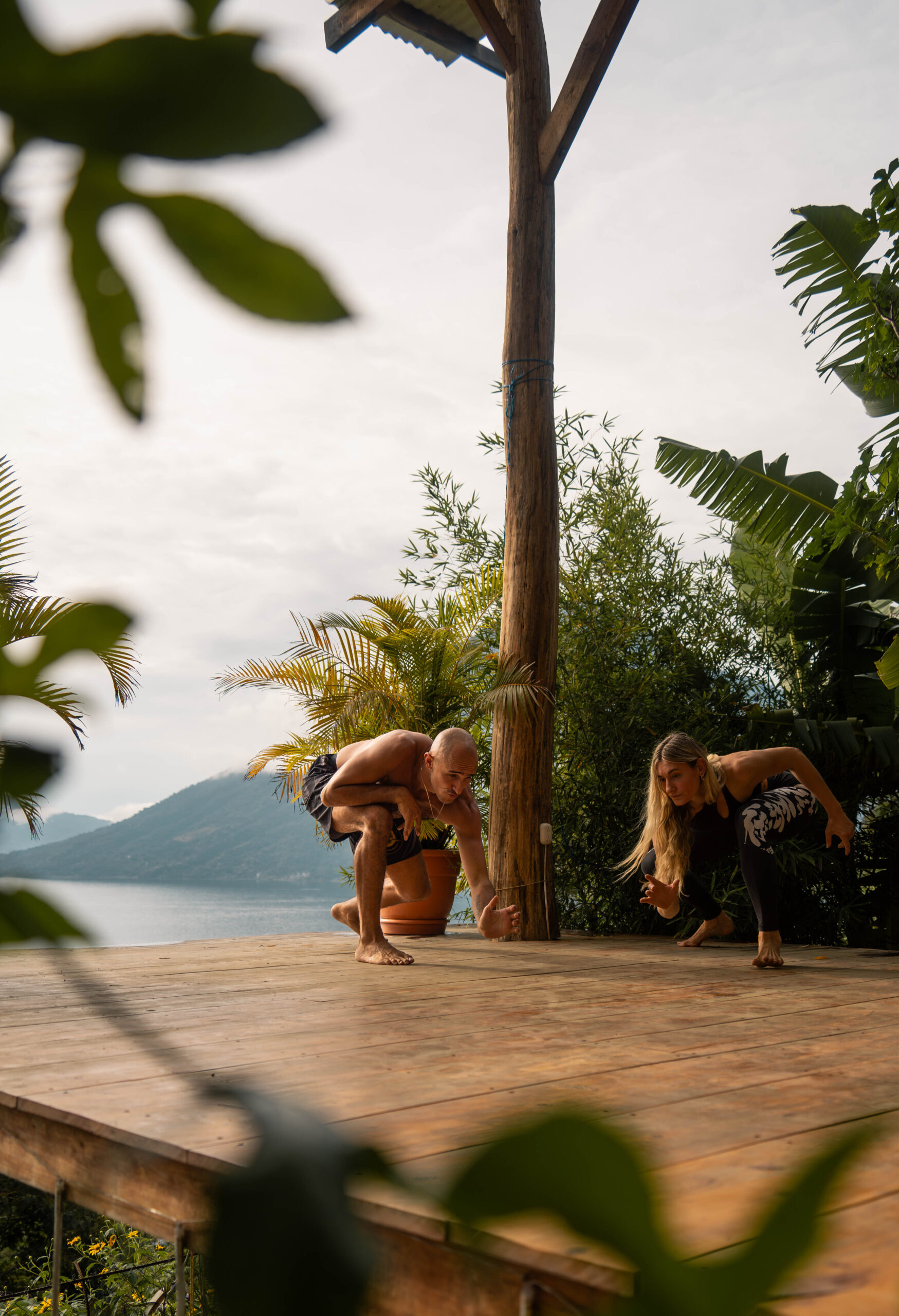
At Eagle’s Nest, we honor the Maya calendar with community ceremonies, conscious movement, and space to simply be with the wisdom of this land.
Whether you join us for a class, a ceremony, or a longer stay, you’re invited to step into the new cycle with intention, clarity, and an open heart.
FAQs About the Mayan New Year
When is the Mayan New Year?
The Mayan New Year is celebrated around February 21, depending on local traditions and the solar Haab’ calendar.
What does the Mayan New Year celebrate?
It celebrates the start of a new solar cycle, the honoring of the Year Bearer, and the renewal of community, nature, and spiritual energy.
How do the Maya celebrate their New Year?
Through sunrise ceremonies, sacred fires, offerings, community gatherings, music, cleansing rituals, and honoring the new energy cycle.
What is the Year Bearer in the Mayan calendar?
It’s the Tzolk’in day sign that governs the energy of the entire year, guiding destiny, community rhythms, and agricultural cycles.
What is the Mayan New Year?
The Mayan New Year is the beginning of the Haab’ solar calendar cycle, marking the moment when a new “Year Bearer” energy steps in.
It’s a time of reflection, cleansing, community gatherings, and ceremonies led by Maya daykeepers. Each new year carries a different guiding energy—such as Iq’, Kej, E’, or N’oj—that influences the spiritual tone of the year ahead.
What is today’s date on the Mayan calendar?
The Mayan calendar date changes daily and includes three counts:
-
Tzolk’in (260-day sacred cycle)
-
Haab’ (365-day solar cycle)
-
Long Count (historic cycle tracking big eras)
To know today’s exact Mayan date, you need a live Mayan date converter or guidance from a local daykeeper, as conversions vary slightly by community and correlation system.
Which is older, Aztec or Mayan?
The Maya civilization is older.
Maya culture began forming around 2000 BCE, while the Aztec Empire rose much later, around 1300 CE. The Maya calendar system is therefore one of the oldest and most sophisticated calendrical traditions in the Americas.
What is the first day of the Mayan calendar?
The first day of the Mayan solar calendar (Haab’) is 0 Pop.
This marks the start of the new year and determines which Year Bearer—Iq’, Kej, E’, or N’oj—will guide the year. The sacred Tzolk’in calendar, however, traditionally begins with 1 Imox (or Imix in Yucatec).
Final Thoughts From Eagle’s Nest Atitlán
Every time the Mayan New Year returns, the lake seems to breathe a little deeper — like the world itself is turning a page.
Here at Eagle’s Nest, we feel honored to witness it year after year.
To see how ancestors’ wisdom still flows through the mountains.
To watch travelers arrive curious and leave connected — to the land, to the people, and to themselves.
If you feel called to experience this living calendar, come visit us during the next New Year cycle.
The sunrise alone is worth the journey.
And who knows — maybe this is the year everything shifts for you.